


Catechumenate Digital Companion
DESIGNING A HYBRID LEARNING EXPERIENCE FOR FAITH FORMATION
The Catechumenate is a long-term Christian faith-formation process centered on reading, reflection, discussion, and spiritual growth. While meaningful, the experience relied heavily on printed books and in-person meetings, making it difficult for some participants, especially busy adults and younger users, to remain engaged consistently.
Our goal was to design a hybrid digital companion that supports, not replaces, the in-person experience by making content more accessible, reflective, and community-oriented.
YEAR
DURATION
Role
2025
3 Months
UX Design
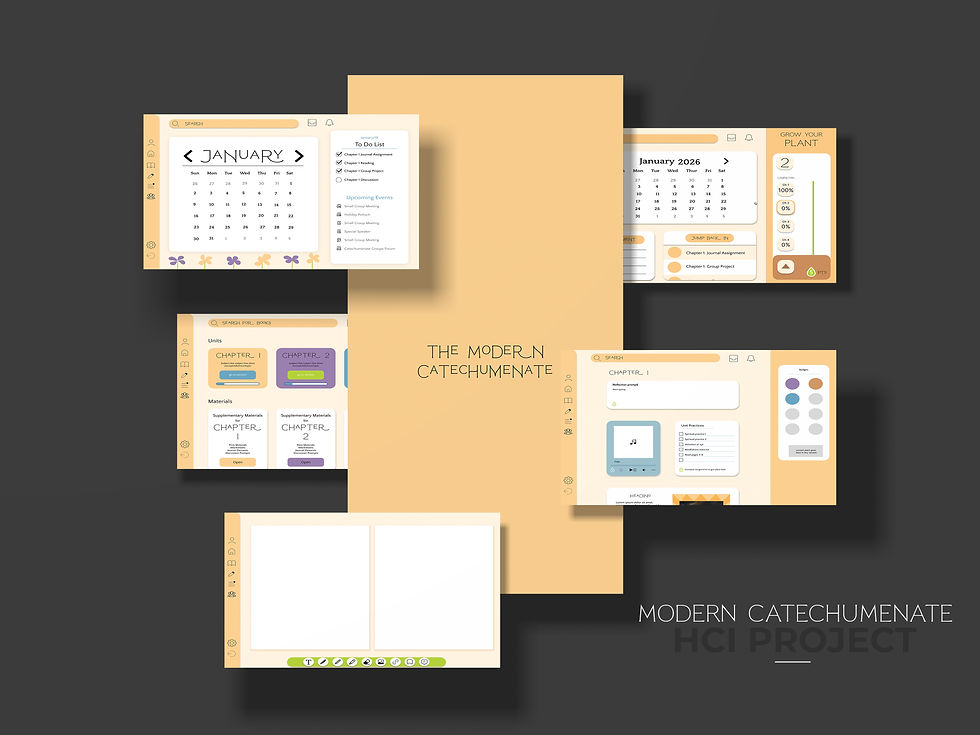
Catechumenate Digital Companion
THE PROBLEM
Participants had different levels of faith experience, schedules, and learning preferences, but the existing process offered limited flexibility.
From interviews and observations, we found several challenges:
-
Long reading assignments felt difficult to maintain.
-
Participants wanted clearer guidance and supplemental explanations.
-
Leaders needed easier ways to organize content and discussion.
-
Spiritual formation activities were difficult to track.
-
Existing experiences lacked continuity between meetings.
Catechumenate Digital Companion
THE CONTRIBUTION
As part of the UX team, I contributed to:
-
Conducting stakeholder interviews
-
Synthesizing qualitative findings
-
Building personas and user stories
-
Designing interaction concepts
-
Creating wireframes and content structure
-
Participating in evaluation and iteration
Catechumenate Digital Companion
DESIGN PROCESS
Data Elicitation
METHOD
We conducted contextual interviews with ministry leaders and stakeholders involved in the Catechumenate program.
Participants
-
Creative Art Director (2 years of ministry experience)
-
Church staff members
-
Program facilitators
Research Questions
-
What led participants into faith formation?
-
How are groups currently organized?
-
What tools support learning?
-
How does success get measured?
Faith backgrounds varied significantly
Participants ranged from:
-
First-time explorers
-
Busy church attendees
-
Long-term Christians seeking depth
This meant one rigid experience would not work.
Spiritual growth mattered more than completion
Success was measured by:
-
Starting ministry
-
Developing spiritual practices
-
Community engagement
-
Continued discipleship
Existing materials lacked flexibility
Current experience:
-
Printed books
-
Group discussion
-
Manual scheduling
Desired additions:
-
Definitions
-
Supplemental readings
-
Accessible summaries
-
Optional digital support
Data Modeling
USER ROLES
Program Administrator (Pastor)
-
Needs visibility into program outcomes and consistent materials.

Data Modeling
USER PERSONA
To represent different engagement styles and motivations, we created personas based on participant goals, constraints, and expectations throughout the Catechumenate experience.

Lead Pastor • 32 • Married • Parent
Paula
Pastor Paula oversees discipleship programs while balancing leadership responsibilities and limited time.
GOALS
-
Ensure consistent and meaningful discipleship across groups
-
Approve and distribute learning materials efficiently
-
Track overall engagement without creating an administrative burden
-
Support leaders while maintaining quality of experience
FRUSTRATIONS
-
Limited time to review all program materials
-
Difficulty measuring spiritual growth through traditional metrics
-
Managing multiple groups with inconsistent teaching approaches
-
Administrative tasks taking attention away from ministry work

Participant • Receptionist • Single Parent • 38
Barbara
Barbara wants to grow spiritually but struggles to find time within her busy daily schedule.
GOALS
-
Continue growing in faith consistently
-
Participate without increasing stress
-
Access content quickly and conveniently
-
Stay connected with the group despite limited time
FRUSTRATIONS
-
Long reading assignments feel overwhelming
-
Difficulty remembering reflections and activities
-
Rarely has time to sit at a laptop
-
Falling behind reduces motivation

Facilitator • High School Teacher • 58
Larry
Larry enjoys teaching and values meaningful discussions and structured preparation.
GOALS
-
Prepare sessions efficiently
-
Guide deeper group discussions
-
Access organized supplemental resources
-
Keep participants engaged and accountable
FRUSTRATIONS
-
Limited preparation time each week
-
Gathering materials from multiple sources
-
Difficulty adapting lessons for different experience levels
-
Manual organization of class resources

Participant • Construction Supervisor • 62
Sam
Sam seeks deeper understanding and values thoughtful reflection and intellectual engagement.
GOALS
-
Explore theology beyond required materials
-
Reflect deeply on readings and discussion questions
-
Access additional scholarly resources
-
Continue long-term spiritual growth
FRUSTRATIONS
-
Limited supplemental materials available
-
No structured way to document deeper insights
-
Difficulty connecting core content to advanced resources
-
Feels constrained by surface-level discussion
Data Modeling
ARTIFACT ECOSYSTEM
Users currently interact through:
Artifact | Who | Purpose / Description |
|---|---|---|
Catechumenate | All Users | Provides structure, reading, exercise, and discussion questions |
Workbook or Journal | Participants | Record reflections, favorite quotes or personal notes |
Discussion Question Sheet | Leaders / Participants | Prompt discussion after reading |
Scripture Memorization Cards | Participants | Help memorize short Bible verses per chapter |
Supplemental Resources List | Leaders | Provides reading lists, related media, ring binders or supplies |
Video Clips / Media | Presenter / Pastor | Visualize the prompt under PowerPoint or printed outline |
Prayer & Response Cards | Church Staff / Participant | Collect prayer requests or reflections |
Digital Platform | All Users | Website or app for accessibility, connection, and reflection |
Design Solution
DESIGN DIRECTION
We proposed a hybrid web application connecting printed materials with digital engagement.
QR Integration
Printed materials linked to:
-
Definitions
-
Videos
-
Reflection prompts
Reflection Support
-
Assignment reminders
-
Reflection prompts
Leader Toolkit
-
Discussion slides
-
Teaching outlines
-
Resource management
Community Layer
-
Group discussions
-
Meeting coordination
-
Shared progress
Design Solution
PERVASIVE INFORMATION ARCHITECTURE
This design approach creates continuity between physical and digital experiences by connecting printed Catechumenate materials with online resources.

Design Solution
ECOLOGICAL CONCEPT DIAGRAM
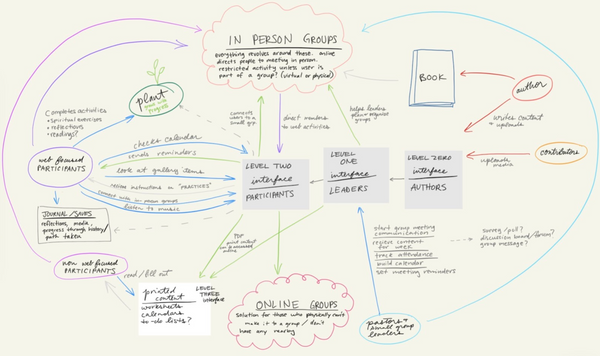
The ecological model visualizes relationships between participants, leaders, content, physical artifacts, and digital tools. Rather than replacing in-person interaction, the platform serves as an ecosystem that strengthens communication, reflection, and long-term engagement.

Design Solution
INTERACTION DESIGN
Storyboard
The storyboard illustrates how users move through the Catechumenate experience over time, highlighting moments of reading, reflection, discussion, and community interaction. It helped define user flow and identify opportunities for support and motivation.

Wireframe
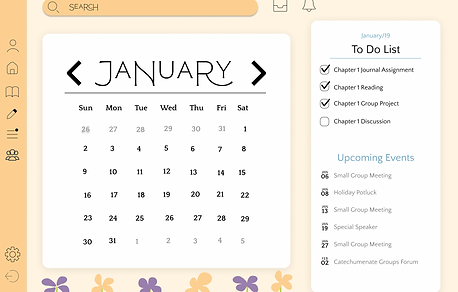
Wireframes translated research insights into interface structures and screen layouts. The designs focused on reducing friction, improving accessibility, and creating a clear path between reading materials, assignments, and reflection activities.

Design Solution
EMOTIONAL DESIGN
The emotional design strategy focused on creating an encouraging and supportive experience rather than a task-oriented learning platform. Visual and interaction decisions were intended to help users feel welcomed, motivated, and connected throughout the process.
Microinteractions
Small moments of feedback, such as encouraging messages after completing readings or assignments, were designed to create a sense of progress and care.
Aesthetic
Decorative typography, icons, and light visual elements were used to create warmth and reinforce reflection and encouragement.
Tone & Language
All communication avoids accusatory or pressure-based language. Notifications and reminders emphasize encouragement, grace, and continued engagement.

IDEATE
TYPOGRAPHY & COLORS
REBORN
ABCDEFGHI abcdefghi
Sandy Brown
#D29865
Yellow-green
#B6D039
Sandy Yellow
#FCCE91
Lavender
#9A80AD
Azure
#69A8C2
Prototype
PROTOTYPE FEATURES
A mobile-first companion experience supporting:
-
Reading
-
Reflection
-
Community
-
Long-term motivation
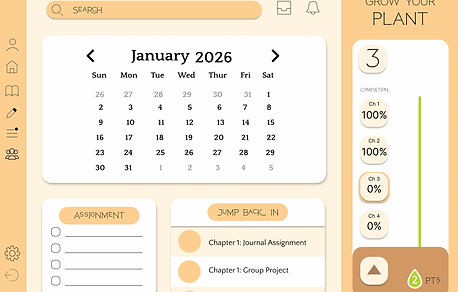
Highlight Feature — Growth Plant
Users earned progress through completing readings and reflections.
Instead of showing percentages:
The experience visualized progress as plant growth to reinforce sustainable spiritual development.





Catechumenate Digital Companion
REFLECTION
This project gave me an opportunity to explore collaboration and interaction design more deeply. Although I had some experience with Figma, this was my first time using it to build a full prototype. I spent time learning through tutorials, experimenting with animations and interactions, and sharing ideas with teammates to create a more engaging experience.
Our team worked closely together, almost like pair programming, giving constant feedback and solving problems together. Through that process, I learned that collaboration often leads to stronger design decisions. One example was shifting the visual direction from making the website feel more professional to making it more playful and welcoming, since the Catechumenate already involves a lot of reading.
One challenge was balancing different opinions and staying aligned, especially during midterms and fall break. Looking back, I think more planning and discussion early on would have improved communication and workflow.
I was also disappointed that we could not conduct a UX evaluation using our own prototype because the class selected one of four team prototypes instead of ours. I think it would have been really fun to test our design, receive feedback, and continue improving it. Even so, this project helped me grow in collaboration, prototyping, interaction design, and designing experiences that support people emotionally, from a more professional feel to a more playful, welcoming one, not just functionally.
